



Ten years ago, FAI managing director Tim Ogden published Experimental Conversations, a collection of interviews with economists and other people who critique, promote, and use randomized controlled trials (RCTs) in development economics. One of the interviewees was Michael Kremer, a pioneer of the movement, now a Nobel laureate, and recently appointed Chief Economist of the World Bank.
Read MoreThe Massive DDoS Edition

Editor's Note:
If you were hoping that the faiV would be a pleasant distraction from the overwhelming flow of AI-related content, sorry. For the record, the faiV had “ai” built in before Anthropic existed. And a housekeeping note: we’ve finally jumped ship from Mailchimp to NYU’s mailing platform—I guess if you’re reading this it’s been a seamless transition and if you’re not, well, you’re not. Feedback on the faiV’s content and format and delivery methods is always welcome, just drop me an email.
- Tim Ogden
The Same As It Ever Was Edition
Editors’ Note: Hi, Laura and Jonathan here. A few of the pieces this week come from people who spent years up close with how poor households actually handle money, and keep coming back with something more tangled than the story usually told, and more persistent. Tim will be back for the next edition. - Laura Freschi and Jonathan Morduch
Read MoreFinancial inclusion’s efficiency is now exposure: Four notes from the faiVLive webinar on emerging AI cyberthreats
The idea for this conversation was born from alarm. At the news that the US Treasury Secretary and the Chair of the Federal Reserve had called a meeting with the CEOs of the twenty largest banks in America to talk about threats to the financial system from emerging frontier AI models, Tim had questions: what about the community banks, the credit unions, and the CDFIs—the financial institutions that serve low-income communities and small businesses in America? When will they be invited to the meetings on how to defend their systems against AIs that can exploit software vulnerabilities with unprecedented ease and speed? And globally, are the regulators in middle-income and developing countries also holding meetings to discuss how they can defend against these threats? Will those meetings include anyone beyond the largest banks?
Read MoreWhat Workers Value and What Owners Can Do: Findings from the Shared Success Final Evaluation
Small business owners overwhelmingly cite cost as the main barrier to improving job quality, but when we asked workers what they valued most, many of their top answers cost relatively little. That gap between owner perception and worker priorities is one of the most actionable findings from the final evaluation of Shared Success, an initiative by the Aspen Institute's Economic Opportunities Program (with support from the Gates Foundation) that worked with 11 Community Development Financial Institutions (CDFIs) to embed job quality programming into their existing small business support.
Read MoreJonathan Morduch at ABCDE 2026: Facts About Job Dynamics
Next month, FAI's Executive Director Jonathan Morduch will join the World Bank's Annual Bank Conference on Development Economics (ABCDE) in Washington, D.C., for a session on labor market dynamics in low- and middle-income countries—questions FAI has been working on through the Small Firm Diaries and earlier household research.
Read MoreWhat it Takes to Improve Small Business Job Quality: Midterm Findings from Shared Success
Small businesses in the US employ nearly two-thirds of workers earning low wages, making them central to both economic mobility and the quality of work itself. Shared Success, launched by Aspen Institute's Economic Opportunities Program with support from the Gates Foundation, is built on the premise that job quality is fundamental to economic resilience, particularly in historically underserved communities. The project worked with 11 community development financial institutions (CDFIs) to embed job quality support into their programming.
Read MoreRegister Now: Emerging Cyberthreats to Global Financial Inclusion
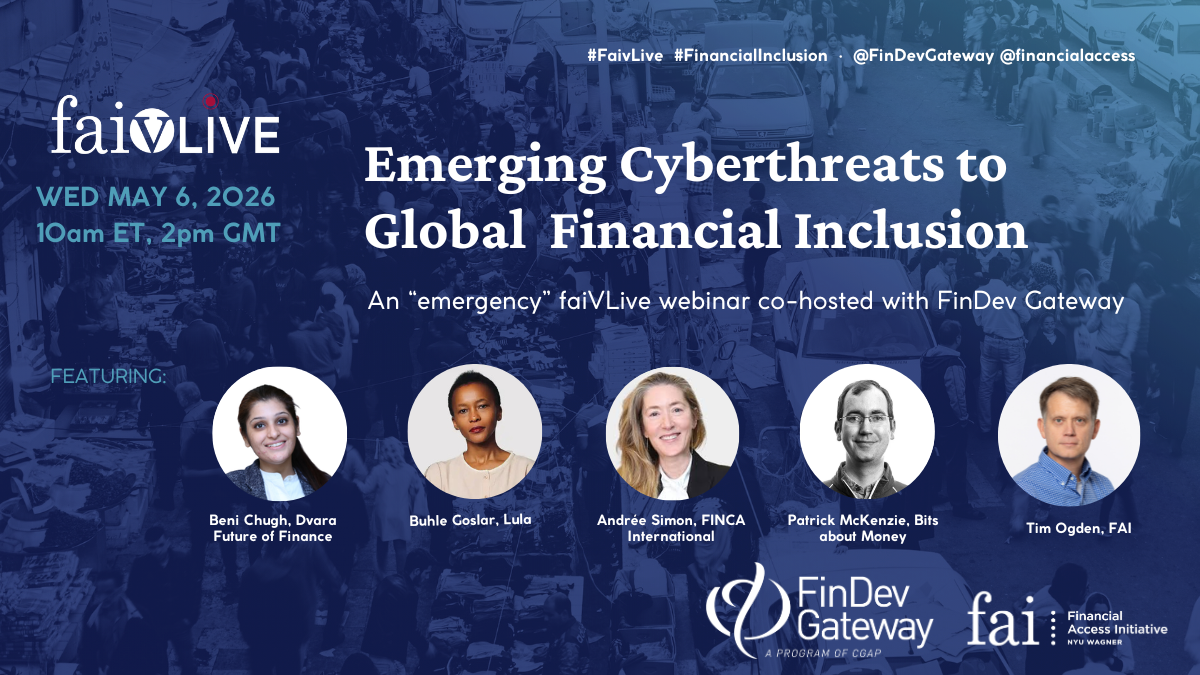
Increasingly powerful AI tools are enabling malicious actors to target financial services systems and institutions the world over. Recently the IMF found cyber-enabled fraud has nearly tripled with losses falling hardest on developing countries. And that was before a new generation of AI models powerful enough to spur an emergency meeting between the US Federal Reserve and the CEOs of the largest banks in the world. These emerging threats are in no way confined to large multinational banks however. AI lowers the costs of cyberattacks, increasing the number of organizations at risk including CDFIs in the US, MFIs around the world, mobile money systems and fintechs focused on lower-income customers.
Read MoreStability Entrepreneurs at the 2026 Global Inclusive Growth Forum
Tim Ogden, FAI Managing Director and Project Director for the Small Firm Diaries, spoke last week at Mastercard’s 2026 Global Inclusive Growth Forum. Invited to share insights into how small firms are weathering challenging and volatile times, he drew on global Small Firm Diaries findings and preliminary data from the study in the US to highlight both aspirations and pain points.
This video was recorded live on April 15, 2026.
Upcoming Event: International Development: Which way now?
FAI Executive Director Jonathan Morduch will moderate a panel on the future of international development at the 2026 NYU DRI Annual Conference on Monday, April 20 at 4pm ET.
The international development sector is in crisis, with aid budgets, donor priorities, and delivery models all being torn up and reconsidered. Crises can also be moments of honest reckoning—openings to ask how we got here, economically and politically, and what should come next for development policy and practice. FAI's work on poverty and inclusive finance runs through a lot of these questions.
Read MoreEarly Findings from the Road: What we’re seeing so far in the SFD USA data
Over the past few weeks, the Small Firm Diaries research team has been visiting US cities to share what we're seeing in the data so far—stopping in St. Louis, Chicago, Baltimore, Atlanta, and New York, with Oakland still ahead on May 26. These conversations have been useful in both directions: hearing where our findings on growth, credit use, and jobs resonate with local audiences, and hearing the questions and pushback that have helped us sharpen our thinking.
A caveat worth stating upfront: we're roughly halfway through the research, with data still being gathered, cleaned, and analyzed. Specific numbers may change. With that in mind, here's some of what we've been discussing.
Read MoreRegister Now: Small Firm Diaries USA Early Findings
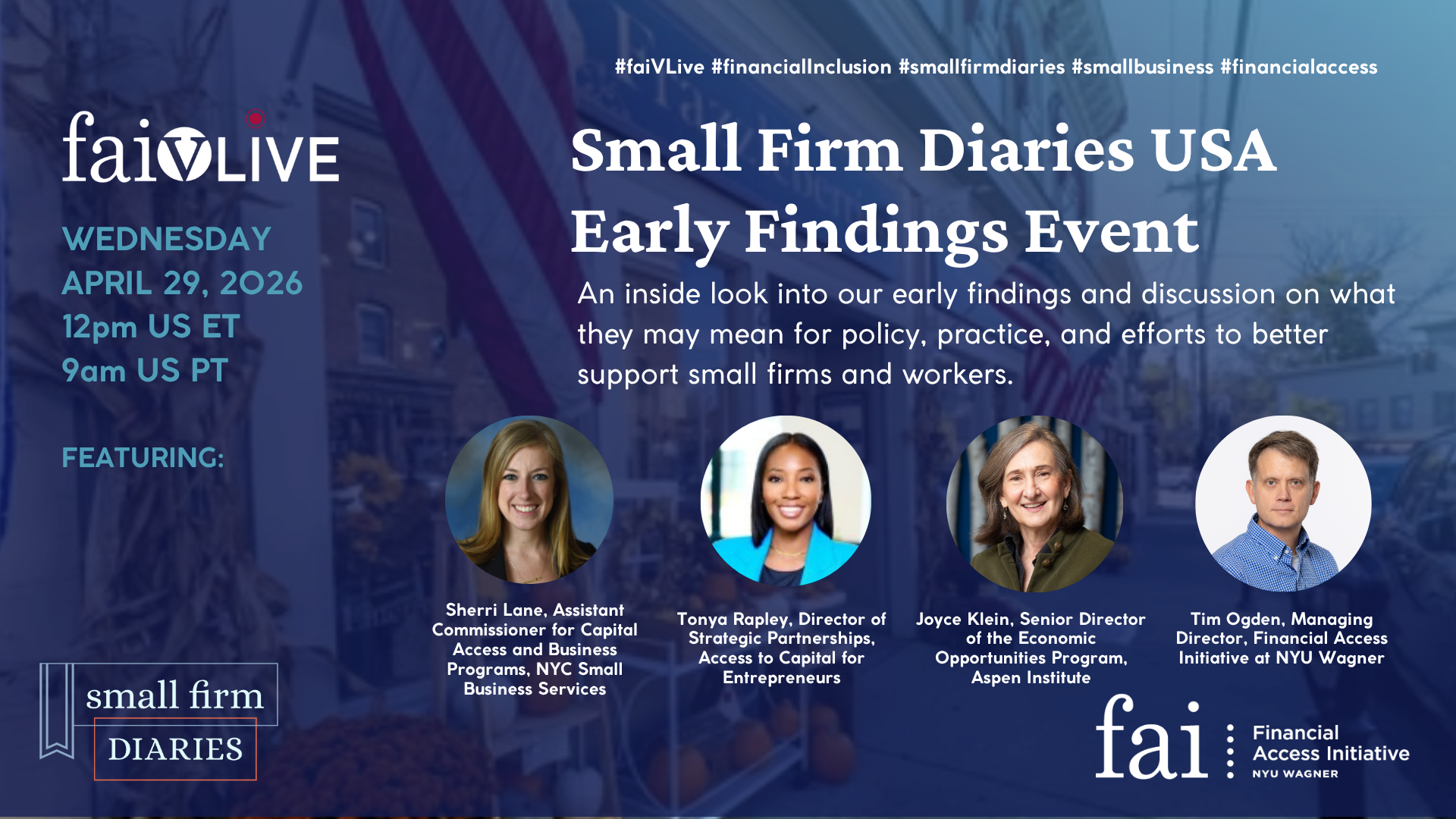
Since the launch of the Small Firm Diaries USA, our research team has been busy collecting data from more than 80 small firms, and we’re excited to share what we’re learning so far. By following firms in low-income communities over time, the research takes an unusually close look at the financial lives of small businesses to surface how business owners manage volatility, respond to shocks, and make decisions that shape their businesses and their workers.
Join us for an inside look into our early findings and discussion on what they may mean for policy, practice, and efforts to better support small firms and workers.
Read MoreRegister Now: Small Firm Diaries USA Early Findings
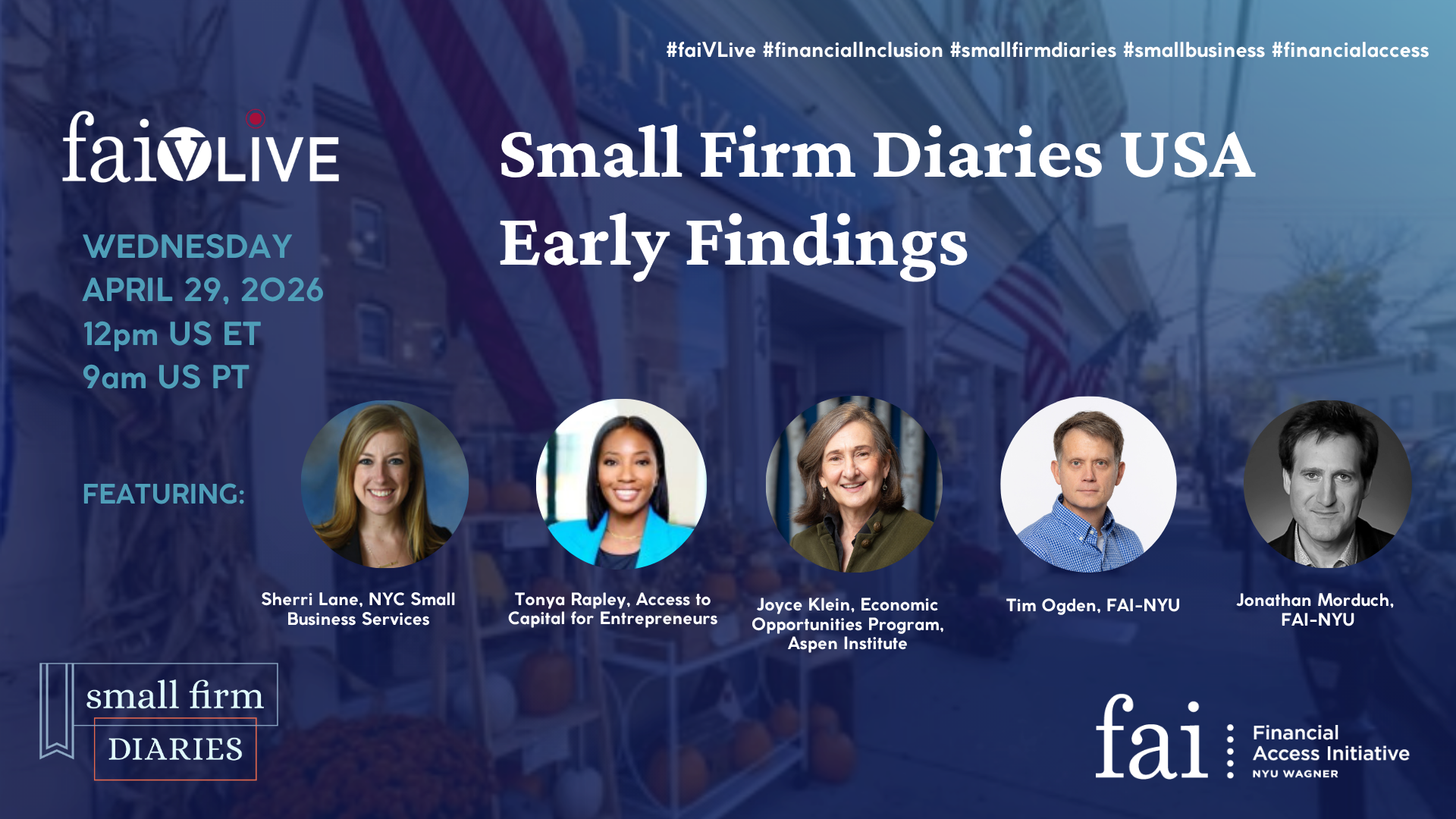
Join us for an inside look into our early findings and discussion on what they may mean for policy, practice, and efforts to better support small firms and workers.
Read MoreThe Dysregulation Edition
Editor’s Note: I hadn’t appreciated the role that normalcy plays in allowing me to be sarcastic and jokey about the various topics I write about, until, well, everything stopped being normal. Please allow me some grace as I try to find a tone that is appropriately direct and honest, and still tries to find some humor in these dark days. - Tim
Read MoreThe Designed for Whom? Edition
Editors’ Note: Hi, it’s Laura and Jonathan again. As a reminder, we’re taking the wheel here every other edition and Tim will be back with you in a couple weeks. One question kept surfacing as we assembled this edition. Emergency savings advice built for stable households, child savings accounts that work best for families who already have 529s, and jobs policy that still imagines a mid-20th century labor market—Who are these systems designed for, really? - Laura Freschi and Jonathan Morduch
Read MoreThe Post-Equilibria Edition
Editors’ Note: This was an unusually difficult to organize and write faiV for two reasons--it feels like everything is some combination of AI and politics, and the new things just kept coming so fast, shifting how I was thinking about and grouping items, which is an item in itself. It’s going to get messy from here. If you’re nostalgic for a simpler world, and you happen to be near Atlanta, Baltimore, Chicago, New York or St. Louis, you should join us for one of our Small Firm Diaries-USA mid-point events in the next few weeks.- Tim
Read MoreThe Please Don't Unsubscribe Edition

Editors’ Note:The reborn faiV newsletter is on an every-two-week schedule. Tim Ogden wrote it for years, and it’s been Tim’s baby. But we’re here to provide another set of voices. Don’t worry, Tim will be back in 2 weeks. About us: Laura is FAI’s Deputy Director and, as she writes below, spent years writing and analyzing foreign aid policy. She now lives with her family in northern Italy. Jonathan teaches at NYU and used to write about finance as it connects to poverty. These days, he’s mainly writing about poverty as it connects to finance. - Laura Freschi and Jonathan Morduch
Read MoreThe Not with a Bang but a Parlay Edition
Editor's Note: It’s a new year and a new faiV. I’ll try not to dwell on what precedes that famous line, nor will I spend a lot of time on explanations or apologies. I will note that the gap between this faiV and the last one is 30% smaller than the previous hiatus. But I figured there was limited time to write a few more faiVs before being replaced by Claude Code. The plan for this part of the cycle is to go to twice monthly, with me (Tim) writing once per month and Jonathan and Laura handling the other one. Also of note, we will be shifting away from Mailchimp imminently so stay tuned for details on shifting your “subscription.”
- Tim Ogden
What’s at Stake Now for Small Business
On November 19, 2025, FAI hosted a faiVLive webinar to introduce the Small Firm Diaries USA study. We shared early observations, and talked with expert panelists about how recent policy and program changes are affecting small businesses and organizations that support them. In this blog we’ve adapted and edited a few of the most interesting discussion points from our conversation. You can still watch the full webinar, here.
Read MoreNew Publication Alert: Big Challenges for Small Firms
Drawing on high-frequency data from small firms, the brief documents how volatility shapes day-to-day decision-making. Week-to-week fluctuations in revenue and liquidity influence choices on hiring, investment, and risk in ways that are often invisible in standard datasets.
Read MoreSEARCH BLOG
STAFF PICKS
Ten years ago, FAI managing director Tim Ogden published Experimental Conversations, a collection of interviews with economists and other people who critique, promote, and use randomized controlled trials (RCTs) in development economics. One of the interviewees was Michael Kremer, a pioneer of the movement, now a Nobel laureate, and recently appointed Chief Economist of the World Bank.